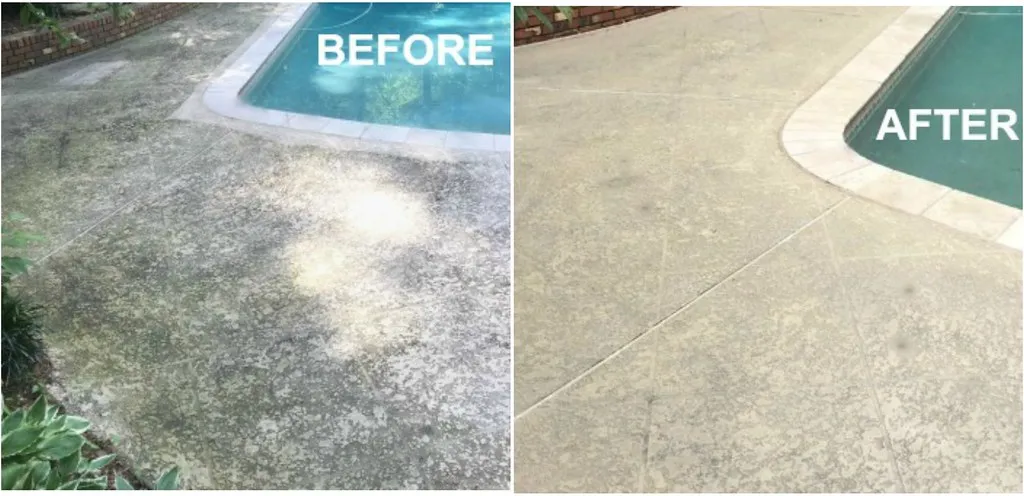
A fresh cleaning makes concrete and pavers look new. Sealing is what helps them stay that way. It's the step after the wash, and it only works if the wash and the drying are done right.
Why seal concrete and pavers
Concrete and pavers are porous. They soak up water, and whatever's in the water comes with it. In Kannapolis that means red clay, pine pollen, tree sap and the occasional oil drip. A sealer fills and coats the pores so those things sit on top, where a rinse can take them off, instead of soaking in.
What sealing helps with:
- Stains. Clay, oil, rust and leaf tannins have a harder time soaking in, and spills wipe up easier.
- Weeds and growth. On pavers, a joint-stabilizing sealer hardens the sand between stones, which makes it harder for weeds and ants to move in.
- Joint sand. Heavy rain and hoses wash loose sand out of paver joints. Sealed sand stays put better, so the stones stay tight.
- Color. Pavers fade in the sun. Many sealers bring back some of the original color. Some leave a natural matte look, others a light "wet look." Ask the contractor to show you the difference.
- Easier cleaning. A sealed surface cleans up faster the next time around.
Signs your surface is ready for sealing
- Pavers that look chalky and faded
- Joints that are low, empty or sprouting weeds
- A driveway that takes on new stains every time it rains
- A pool deck or patio that turns green in the shade every summer
- Water that soaks straight in instead of beading up
Clean first, always
Sealer locks in whatever is on the surface. Seal over red clay or mildew and you've sealed the stain in. So every sealing job starts with a full driveway cleaning using a surface cleaner, with stain treatment where it's needed. On pavers, the crew cleans at a lower pressure so it doesn't blow out more joint sand than necessary.
Dry time before sealing
This is the step that gets rushed, and it's the one that matters most. Sealer goes on a dry surface. If water is trapped under it, you can get a cloudy, white haze that's hard to fix.
After washing, concrete and pavers usually need at least a full day to dry. In humid Kannapolis summers, or after a rain, it can take longer. Shaded areas dry slowest. Most of the time the crew cleans on one visit and comes back to seal on another, once the slab is truly dry and the forecast is clear.
How sealing works
- Deep clean and stain treatment. Done on the first visit.
- Re-sand pavers if needed. Low joints get topped up with fresh sand before sealing.
- Check the weather. The job needs dry ground and a dry window after application.
- Apply the sealer. Sprayed or rolled on evenly, with edges and joints worked in.
- Cure. Foot traffic is usually fine within a few hours. Cars need to stay off longer, often a day or more. The contractor will give you a time based on the product and the weather.
How often to reseal
Most sealed concrete and pavers need resealing every few years. Driveways in full sun and with a lot of car traffic wear faster. Shaded patios and walkways usually last longer. A good test: sprinkle water on the surface. If it beads, the sealer is still working. If it soaks in and darkens, it's time.
What a good contractor won't do
- Seal a surface that hasn't been cleaned and fully dried.
- Push sealing on a plain concrete driveway that doesn't need it.
- Seal over cracked or heaving pavers without telling you first. Sealing doesn't fix a base problem.
Pair it up
Sealing follows a driveway cleaning every time. It's also a good finish for a pool deck or patio after deck and fence washing, and many businesses seal walkways and entries after commercial pressure washing. Sealing is quoted on site. See the price guide for what sets the cost, or call (980) 324-2648 to set up a look.
Questions people ask
How long after pressure washing can concrete be sealed?
At least a full day in good drying weather, and longer after rain, in deep shade or during a humid stretch. Sealing over damp concrete can trap moisture and leave a white haze, so a good crew waits until it's truly dry.
Should I seal my concrete driveway?
Not always. A plain broom-finish driveway in good shape can do fine without it. Sealing makes more sense for pavers, stamped or colored concrete, pool decks and driveways that stain easily. You should get an honest answer once the contractor sees it.
Will sealing stop weeds between my pavers?
It helps a lot. A joint-stabilizing sealer hardens the sand, so weeds have a harder time taking root. Seeds can still land on top and sprout in neglected spots, but it's far less than with loose sand.
Will sealer make my pavers slippery?
Some glossy sealers can be slick when wet. For walkways, pool decks and steps a matte sealer or an anti-slip additive can be used. Tell the contractor how the area is used so the product matches it.